

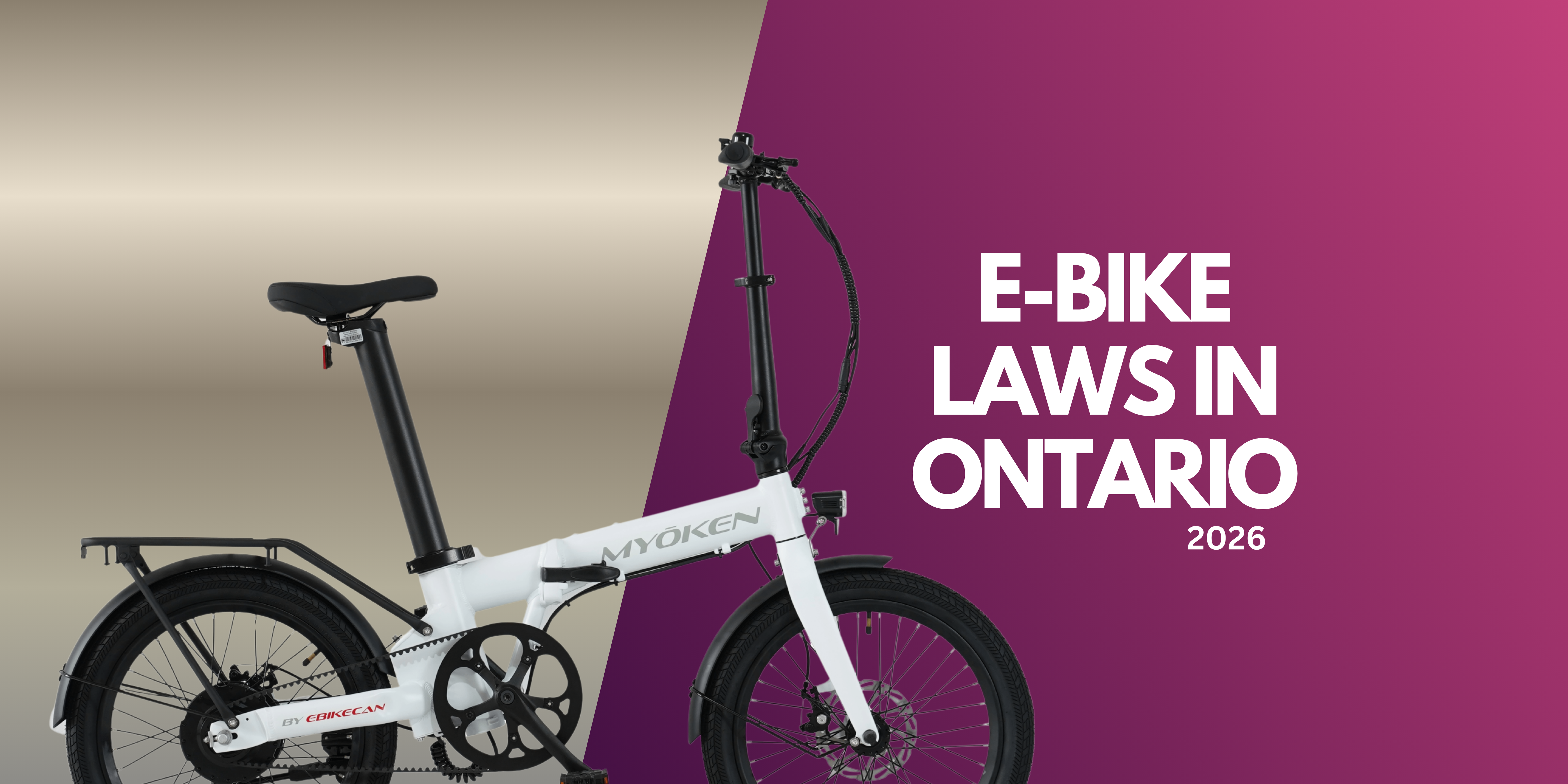
Electric bikes are becoming a popular choice across Ontario for commuting, running errands, and enjoying the outdoors. They make cycling easier and more accessible, but they also come with rules that every rider should know.
Whether you're buying your first e-bike or already own one, this guide explains Ontario's e-bike laws in simple terms so you can ride with confidence.
What Counts as a Legal E-Bike in Ontario?
In Ontario, an electric bike is officially known as a power-assisted bicycle (PAB). To be considered a legal e-bike, it must meet the province's requirements.
A legal e-bike must:
- Have an electric motor with a maximum output of 500 watts
- Provide motor assistance only up to 32 km/h
- Weigh no more than 120 kg, including the battery
- Have working pedals that can propel the bike
- Be equipped with two independent brakes
- Have the battery and motor securely attached
- Use properly insulated electrical wiring and components
If an e-bike has been modified to go faster or produce more power than these limits, it may no longer be classified as a bicycle under Ontario law.
Do You Need a Licence or Insurance?
No. One of the biggest benefits of riding a legal e-bike is that you don't need the same paperwork required for a car or motorcycle.
You do not need:
- A driver's licence
- Licence plates
- Vehicle registration
- Vehicle insurance
As long as your e-bike meets Ontario's legal definition, you can ride it under the same general rules that apply to bicycles.
How Old Do You Have to Be?
You must be 16 years of age or older to ride an e-bike on public roads in Ontario.
This age requirement is different from regular bicycles, which can be ridden by younger children.
Is Wearing a Helmet Required?
Yes. Every e-bike rider in Ontario must wear an approved bicycle or motorcycle helmet, no matter their age.
A properly fitted helmet is one of the simplest ways to reduce the risk of serious injury and is required by law.
Where Can You Ride an E-Bike?
In most cases, you can ride an e-bike anywhere a regular bicycle is allowed.
This usually includes:
- Public roads
- Bike lanes
- Many cycling routes and multi-use paths
However, e-bikes are generally not allowed on:
- 400-series highways
- Other controlled-access highways
- Sidewalks
- Trails or paths where local municipalities prohibit them
Because each municipality can create its own bylaws, it's always worth checking local rules before riding on park trails or recreational paths.
Can an E-Bike Go Faster Than 32 km/h?
Yes—but only with your own effort.
The 32 km/h limit applies only to motor assistance. Once you reach that speed, the motor must stop helping.
If you're riding downhill or pedaling hard enough to exceed 32 km/h on your own, you're still riding legally.
Is It Legal to Modify an E-Bike?
In most cases, no.
Changing an e-bike so that the motor delivers more than 500 watts or continues assisting above 32 km/h can make it illegal to use as an e-bike on public roads.
Once modified beyond Ontario's limits, the vehicle may be treated as a motor vehicle, which can require licensing, registration, and insurance.
Do E-Bike Riders Have to Follow Traffic Laws?
Absolutely.
E-bike riders have the same responsibilities as cyclists and must follow Ontario's traffic rules.
This includes:
- Stopping at stop signs and red lights
- Yielding when required
- Riding in the same direction as traffic
- Using hand signals when turning
- Sharing the road respectfully with drivers, cyclists, and pedestrians
Following these rules helps prevent accidents and makes riding safer for everyone.
Are Ontario's E-Bike Rules Expected to Change?
Ontario has discussed updating its e-bike regulations to better separate traditional bicycle-style e-bikes from faster or heavier electric vehicles.
While future changes are possible, the current rules remain in effect. If new legislation is introduced, riders should make sure they understand any updated requirements.
Ontario E-Bike Laws at a Glance
| Requirement | Ontario Rule |
|---|---|
| Maximum Motor Power | 500 W |
| Maximum Assisted Speed | 32 km/h |
| Driver's Licence | Not Required |
| Registration | Not Required |
| Insurance | Not Required |
| Minimum Rider Age | 16 Years |
| Helmet | Required |
| Functional Pedals | Required |
| Maximum Weight | 120 kg |
Final Thoughts
Ontario's e-bike laws are straightforward once you understand the basics. If your e-bike meets the legal requirements and you follow the same rules as other cyclists, you can enjoy a safe and hassle-free riding experience.
Before every ride, make sure your bike is in good working condition, wear your helmet, and stay aware of local bylaws that may apply in your area.
Knowing the rules not only keeps you on the right side of the law—it also helps make Ontario's roads and trails safer for everyone.
![[REVIEW] Lancet 2.0 Core by Ebike Escape](http://www.ebikecan.ca/cdn/shop/articles/81dc52ab-798f-42b7-b185-0e087564f264_82e14859-71bd-4774-9555-8840f9cbc04b.jpg?v=1769289767&width=800)
Share:
[REVIEW] Lancet 2.0 Core by Ebike Escape
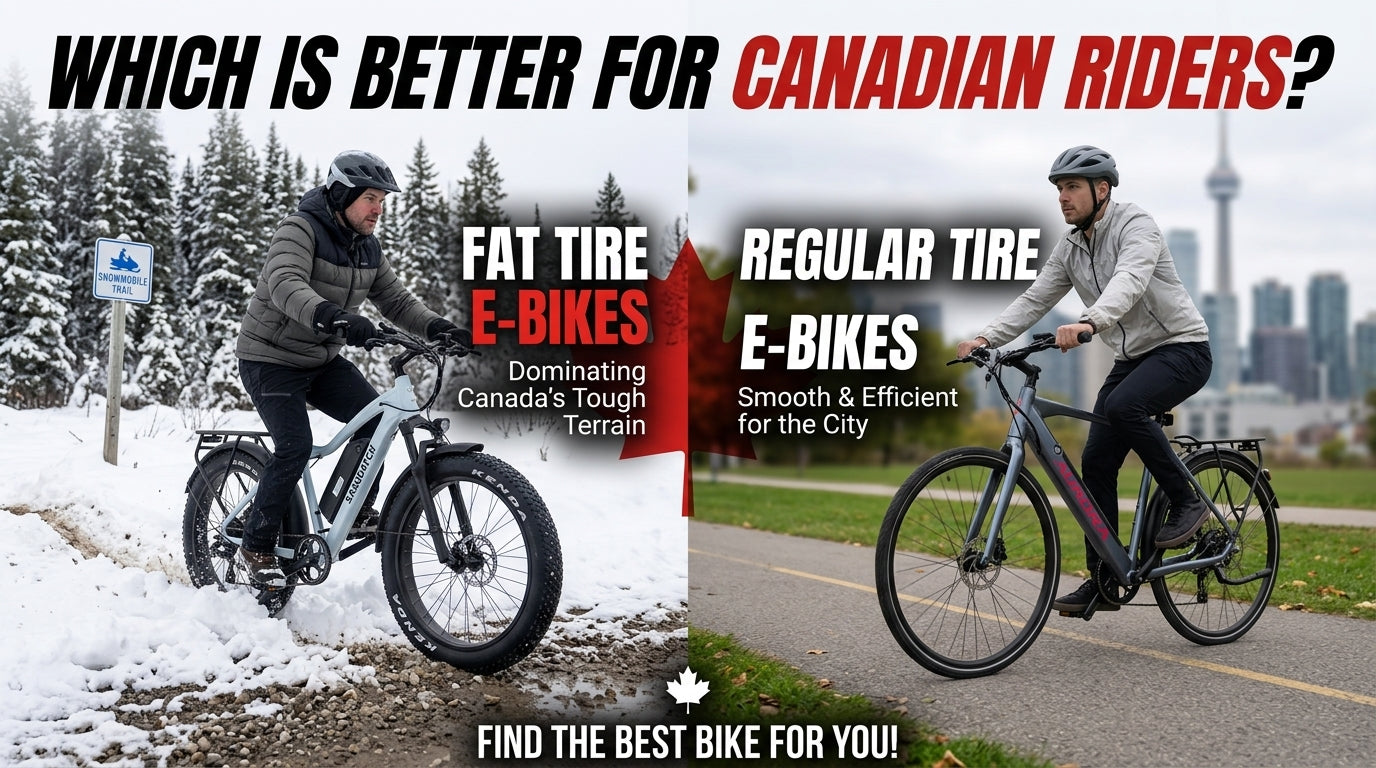
Fat Tire vs. Regular Tire E-Bikes: Which Is Better for Canadian Riders?